
Where to Stay in Tokyo for the First Time (What I Wished I Knew)

The first time I stayed in Tokyo, I didn’t choose my accommodation at all. It was a student exchange. The university organized everything and I just showed up with a suitcase. The second time, I had to decide where to stay in Tokyo for our group of four.
We had two nights. I booked the cheapest place I could find near a metro station in Shinjuku because that’s what every list recommended, and I didn’t know enough yet to question it.
That first night, I lay awake listening to the city. I could hear crowds somewhere in the distance. I was exhausted but it still took a while before I fell asleep.
When we made it to Asakusa the next day, I felt so relaxed. The streets were narrower, quieter. The pace was different. I didn’t have to brace myself just to step outside. By the end of the afternoon I already knew I’d chosen the wrong place to sleep.
I’ve been thinking about that mistake ever since — because Tokyo is a city that can either exhaust you or open up, and a lot of that depends on where you sleep at night.
This guide is for the first-time Tokyo visitor who wants to actually enjoy the city without ending up drained by the end of every day. I’ll break down each area — Asakusa, Shinjuku, Shibuya, and Tokyo Station — so you can choose based on how you want your trip to feel, not just what’s closest to a train line.

Asakusa – For a Calm First Tokyo Experience
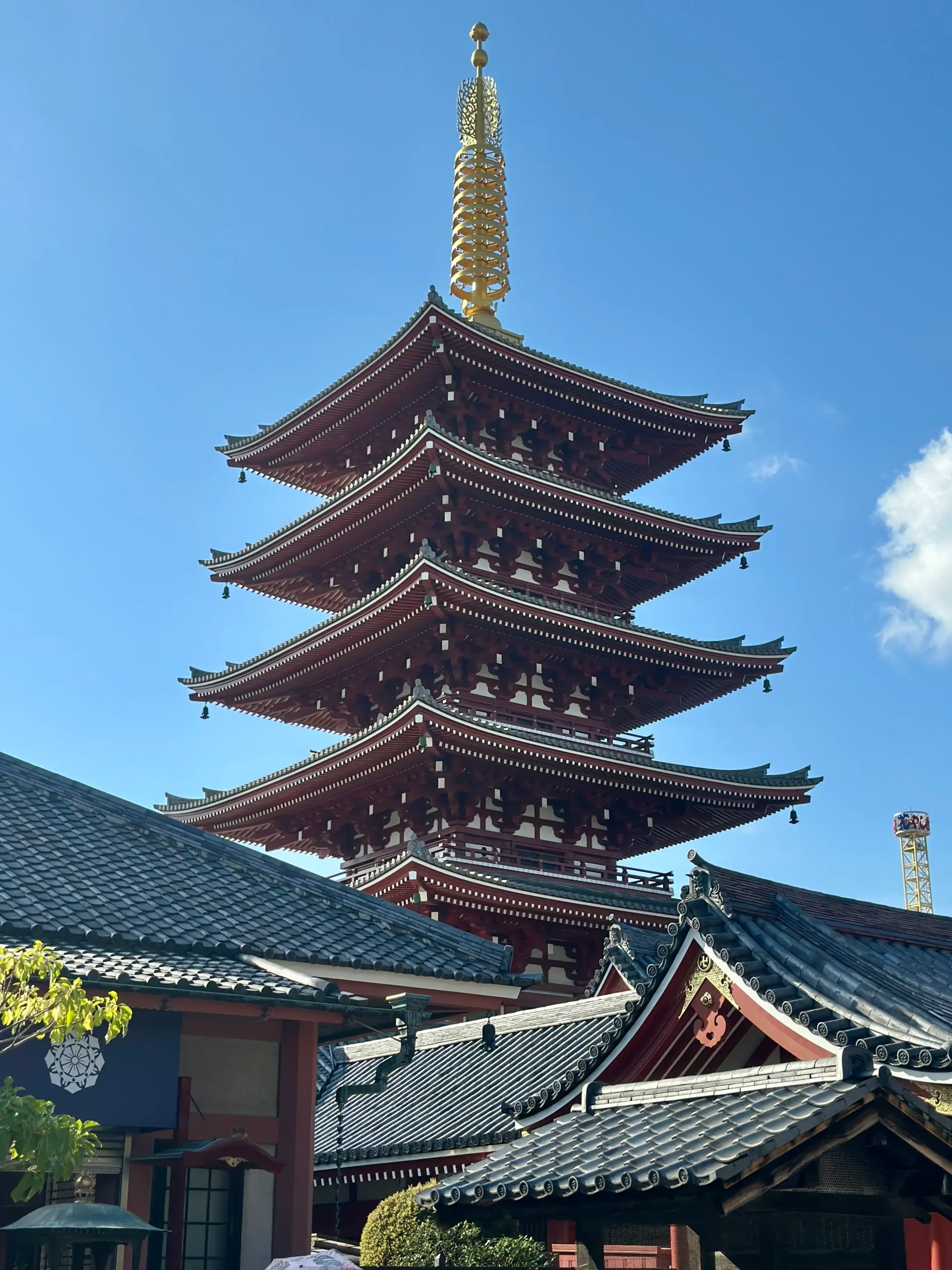
If there’s one place I’d tell every first-time Tokyo visitor to stay, it’s Asakusa.
The neighbourhood has the temples, the traditional architecture, a variety of Japanese food — but it holds them at a pace you can actually absorb.
I was amazed how easy it is to walk around. We visited Sensō-ji right before the tour groups arrived. We walked into the side streets and found something quieter and older.
We even had a sushi-making class, took a short walk around the neighbourhood, then headed to the Skytree — all in one day.
What I didn’t expect was how much physical ease it gave me. In Shinjuku, I spent mental energy just navigating. In Asakusa, I spent it noticing things. It felt like I was finally in Tokyo to experience it, not just to get through it.
The pace is slower, the streets are easier to navigate, and it never feels like you’re fighting crowds just to get from point A to point B. You can reach the rest of Tokyo easily when you want to. But you don’t have to earn the right to your own evening.
The next time I go back, I’ll only stay here.
Who Asakusa Is Best For
- First-time visitors who feel overwhelmed easily
- Travelers who value better sleep after full sightseeing days
- Parents or older travelers who want simpler navigation
Downsides of Asakusa
- Nightlife is limited compared to areas like Shinjuku or Shibuya
- Evenings are quieter, with fewer late-night dining and bar options
Where to Stay in Asakusa
Best Budget:
hotel MONday Asakusa
Best Mid-Range:
Asakusa Tobu Hotel
Best Luxury:
Mimaru Tokyo Asakusa Station
Pro tip: If want Asakusa’s calm but you want quicker JR Line access, Ueno is a practical alternative nearby, Landabout Tokyo is a great place to stay in Ueno if transportation convenience is your top priority.
Shinjuku – For Convenience, Nightlife and Food
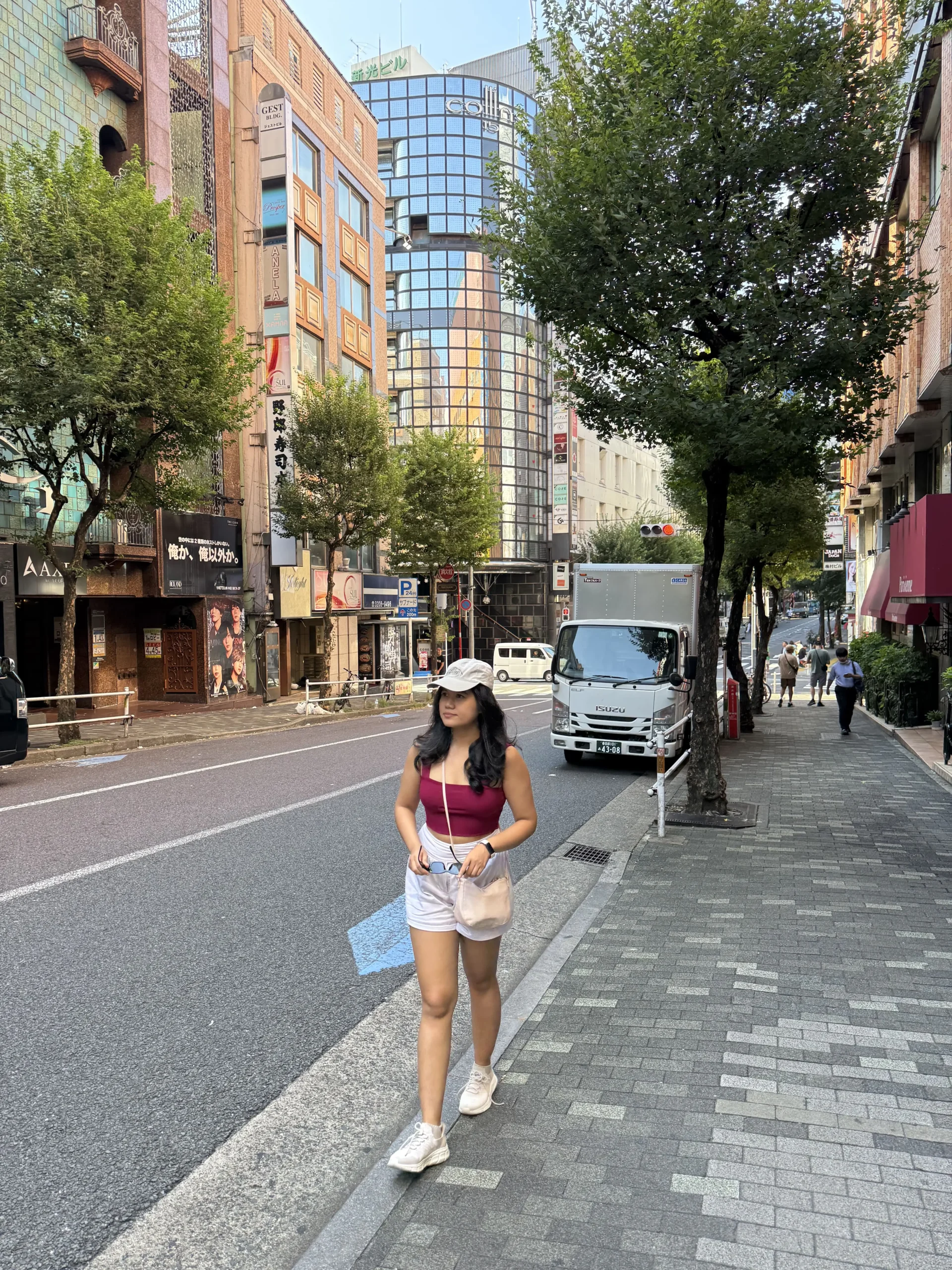
Shinjuku is where I made my mistake — and honestly, it’s easy to see why I made it.
Everything is there. Major train lines, convenience stores open at 3am, ramen at any hour, a city that doesn’t seem to have a closing time. When we arrived and I saw how quickly we could get anywhere, I felt like I’d made a smart, practical choice.
By the first night I understood the tradeoff. The station is enormous — genuinely disorienting until you learn it, and even then.
The energy that makes Shinjuku exciting during the day is the same energy that makes it hard to wind down at night. I’d come back to the room with my feet aching and the streets still full below, and it was difficult to convince my body that the day was over.
I’m not saying Shinjuku is wrong. For certain kinds of travelers it’s exactly right — if you want to stay out late, eat at midnight, feel the full pulse of the city, this is where you feel it most. But if you’ve flown a long way and you’re trying to actually absorb Tokyo rather than just move through it, you may find that the convenience costs you something.
Know what you’re choosing when you book here.
Who Shinjuku Is Best For
- Travelers who love nightlife and a lively city atmosphere
- First-time visitors who want maximum convenience and easy transportation
- Short-stay travelers who want to be close to everything
Downsides of Shinjuku
- Crowded and noisy in the evenings
- Large stations can feel overwhelming at first
- Less relaxing after long sightseeing days
Where to Stay in Shinjuku
Best Budget:
Daiwa Roynet Hotel Nishi-Shinjuku Premier
Best Mid-Range:
Hotel Sunroute Plaza Shinjuku
Best Luxury:
Park Hyatt Tokyo
Shibuya – For Buzz, Energy and Movement

Shibuya is the Tokyo that most people picture before they arrive — the crossing, the screens, the sense that you’ve stepped inside something that moves faster than you do.
I haven’t slept in Shibuya, but I’ve spent enough time there to know I wouldn’t.
What Shibuya does well is buzz. It’s a neighbourhood built for the daytime — fashion, food, movement. The crossing alone is worth seeing once, and the streets that branch off it have a genuine vitality that Shinjuku’s more functional commercial strip doesn’t quite match.
That said, if you’re jet-lagged, trying to slow down, or looking for a neighbourhood that feels liveable rather than spectacular, Shibuya can feel relentless. The station is one of the more complex in the city. The crowds are constant. The hotels tend to be more expensive than other areas for what you get.
If the energy is what you came for, Shibuya will deliver it. If you’re not sure yet, that same energy is what you’ll be recovering from every night.
Who Shibuya Is Best For
- Travelers who love shopping, fashion, and pop culture
- First-time travelers who want a lively, modern Tokyo experience
- Travelers who plan to spend lots of time exploring on foot
Downsides of Shibuya
- Very crowded, especially during the day
- Large stations can be confusing for first-time visitors
- Can feel tiring if you prefer slower mornings or quiet evenings
If calm, rest, and simplicity are priorities, Shibuya may feel like too much.
Where to Stay in Shibuya
Best Budget:
sequence MIYASHITA PA
Best Mid-Range:
lyf Shibuya Tokyo
Best Luxury:
Cerulean Tower Tokyo Hotel
Tokyo Station Area – For Easy Arrivals and Departures

The Tokyo Station area isn’t the most atmospheric choice, but it’s worth knowing about as the practical one.
I haven’t stayed here myself, but I’d recommend it for one specific kind of trip.
If you’re arriving from another part of Japan by Shinkansen, departing early for somewhere else, or if this is genuinely a stopover and you’ll be on a train before breakfast — the area around Tokyo Station makes the most sense.
If Tokyo is the destination, one of the neighbourhoods above will serve you better. If Tokyo is the connection, this one does its job.
Who the Tokyo Station Area Is Best For
The Tokyo Station area is a good fit if you’re:
- First-time visitors nervous about transportation
- Travelers arriving late or leaving early
- People planning day trips or onward travel by Shinkansen
Downsides of the Tokyo Station Area
- Limited nightlife
- More business-focused, especially on weekends
- Less character compared to Asakusa or Shibuya
If you want Tokyo to feel lively right outside your hotel, this area may feel a bit too quiet.
Where to Stay Near Tokyo Station
Best Budget:
Hotel Mystays Premier Hamamatsucho
Best Mid-Range:
Hotel Metropolitan Tokyo Marunouchi
Best Luxury:
The Tokyo Station Hotel
Planning the rest of your Tokyo trip?
- For getting around once you arrive: Is the Tokyo Metro Pass Worth It?
- For where to spend your days: Things to Do in Tokyo and Tokyo Hidden Gems
- For the best day out of the city: Day Trips from Tokyo
- For a cooking experience worth building an afternoon around: Sushi Making Class in Tokyo and Tokyo Cooking Classes
A Last Thought on Where You Sleep
Tokyo is a city that rewards attention. It has neighbourhoods that move at different speeds, streets that feel completely different from one block to the next, a culture of care in small things — the folded receipt, the umbrella bag at the entrance, the way a shopkeeper bows as you leave.
You access most of that through time and presence, not through logistics. And time and presence start with where you sleep.
If you choose a neighbourhood that matches your pace — not the pace you think you should have in Tokyo, but the one you actually need — the city opens in a different way. You come home with something that lingers, rather than just a list of things you completed.
That’s the only reason I’d push you toward Asakusa over the obvious options — and toward being honest about what Shinjuku is actually asking of you.
It’s not that one is better. It’s that one might suit you better — and that difference is the whole trip.
